

Congo-Brazzaville: Where Ancient Iron Meets Colonial Rails
Beyond its vast rainforests, the Republic of the Congo holds a remarkable story of colonial history, strategic railways, ancient iron formations, and untapped mineral wealth. Drawing on my experiences in the country between 2024 and 2026, this article explores how Congo-Brazzaville’s natural resources, industrial ambitions, and complex past continue to shape its future.
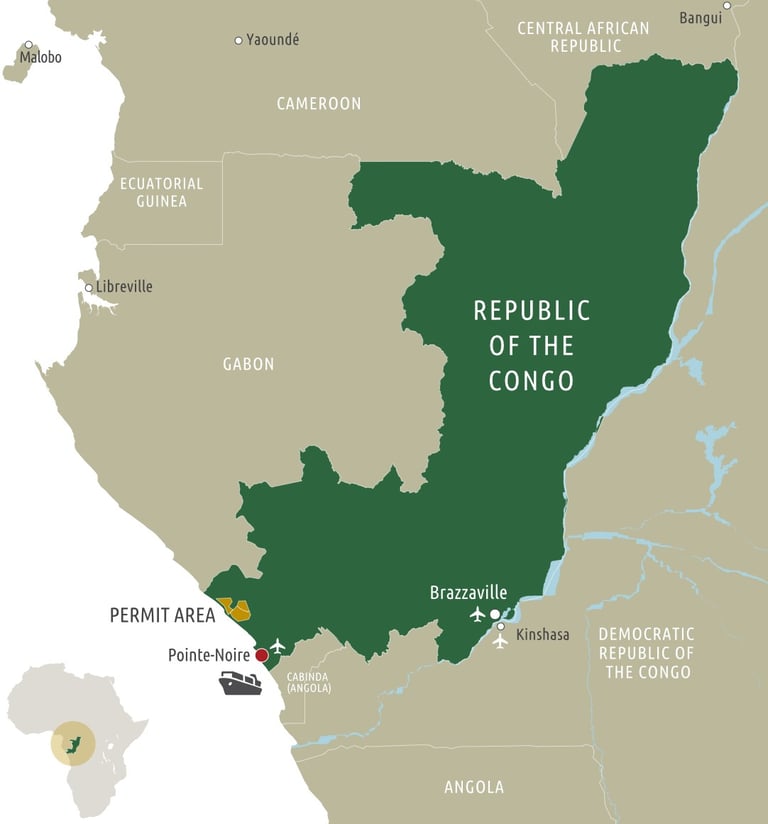
The Republic of the Congo: History, Natural Resources, and Industrial Infrastructure
First, it is important to distinguish between two countries that are frequently confused with one another:
The Republic of the Congo — also known as Congo-Brazzaville: Its capital is Brazzaville, and the country was colonized by France.
The Democratic Republic of the Congo — also known as the DRC or Congo-Kinshasa: Its capital is Kinshasa. Its colonial history is associated first with King Leopold II of Belgium and later with direct Belgian rule.
Most online reports concerning child labour, cobalt, and coltan relate to the Democratic Republic of the Congo. The mining story of Congo-Brazzaville, however, is centred primarily on oil, iron ore, potash, and phosphate.
When France was occupied by Nazi Germany in 1940, French Equatorial Africa sided with Charles de Gaulle. Between 1940 and 1943, Brazzaville became the symbolic capital of Free France.
“While France was under occupation, the political centre of the French resistance was not in Europe, but in Africa.”
The Republic of the Congo gained its independence from France on 15 August 1960. Following independence, the country developed close relations with the Soviet Union and the Eastern Bloc for many years. The socialist model had a significant influence on education, military assistance, and state institutions. The Republic of the Congo adopted a multiparty political system in 1991. Brazzaville and Kinshasa, the capital of the Democratic Republic of the Congo, are located on opposite banks of the Congo River. They are widely regarded as two of the closest national capitals in the world. Nevertheless, as of July 2026, there is still no permanent operational road or railway bridge connecting them.
“The capitals of the two countries can see each other across the river, yet there is still no bridge between them.”
According to World Bank data published in 2025, forests cover more than 69% of the country’s land area and store approximately 16 billion tonnes of carbon. While the global mining identity of the Democratic Republic of the Congo is largely associated with copper and cobalt, the future mining identity of Congo-Brazzaville may be shaped by a combination of iron ore, potash, phosphate, and its established oil industry.
The Congo–Ocean Railway
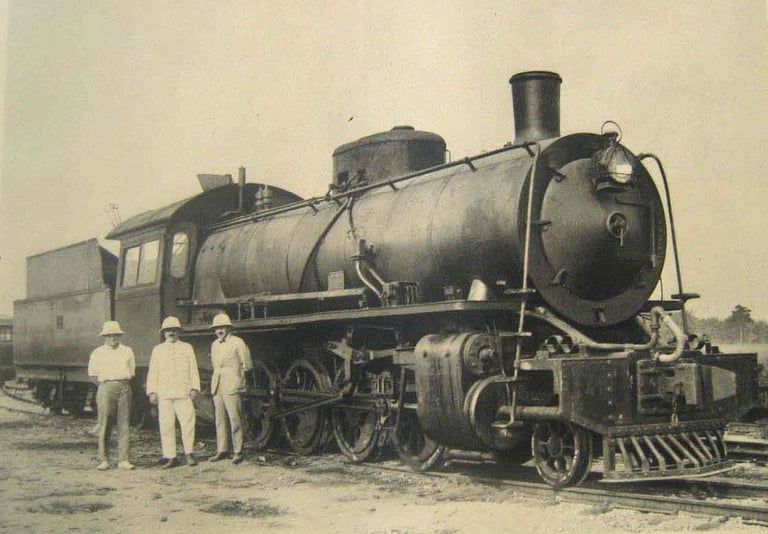
Construction of the Congo–Ocean Railway began after the First World War. The railway was built largely by African workers subjected to forced labour. It was not merely a transport project, but also a central pillar of the colonial economy.
According to research by Stanford University historian J. P. Daughton, based on French and Congolese archival records, at least 20,000 people are believed to have died between 1921 and 1934. Workers faced malnutrition, disease, poor accommodation, physical violence, and extremely harsh working conditions. For this reason, the Congo–Ocean Railway is remembered as one of the deadliest infrastructure projects in history.
The railway was constructed between 1921 and 1934 to connect Brazzaville with the Atlantic port of Pointe-Noire. Its purpose was to bypass the waterfalls and powerful currents of the lower Congo River and transport goods from the interior to the coast. During the 1960s, the Mbinda branch was developed to transport manganese produced by the COMILOG company in Gabon for export through Pointe-Noire. After Gabon constructed its own railway, manganese transport along this route largely came to an end. However, because the same railway passes close to the major iron ore deposits around Mayoko, the former manganese corridor has gained new strategic importance.
“A railway that once carried manganese is now preparing to be reborn as an iron ore corridor.”
Geological Origin of the Iron Ore Deposits
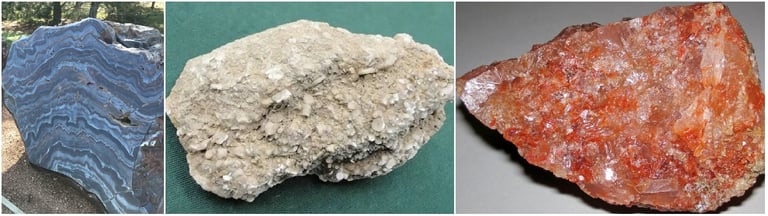
Most of the mineralisation around Mayoko, Zanaga, and Nabeba is associated with Banded Iron Formations, commonly known as BIFs.
These rocks were formed during the Precambrian era, when dissolved iron in ancient oceans reacted with oxygen and settled on the seabed. Over millions of years, this process created alternating layers of iron oxides and silica-rich material. Congo-Brazzaville has far greater iron ore potential than is commonly recognised. The country’s principal iron ore regions include:
Mayoko–Moussondji
Mayoko–Lékoumou
Zanaga
Nabeba
Avima
Badondo
For example, the Zanaga company has reported a JORC-compliant mineral resource of 6.9 billion tonnes, including approximately 2.1 billion tonnes of ore reserves. These figures are mineral resource and reserve estimates published by the company.
Potash and Other Mineral Resources
Large potash deposits are located in the coastal basin north of Pointe-Noire. These deposits are associated with thick evaporite layers formed when saline waters trapped in geological basins evaporated during the opening of the Atlantic Ocean. According to company data published by Kore Potash, the Kola Project contains 508 million tonnes of measured and indicated mineral resources at an average grade of 35.4% KCl.
“Beneath the soil of the Congo lies not only the raw material needed to produce steel, but also the fertiliser minerals needed to support global agriculture.”
Although the country’s economy remains heavily dependent on oil, deposits and occurrences of gold, diamonds, and base metals are also present. However, these resources do not yet define the country’s main mining identity.
Known mineral occurrences and exploration targets in the Republic of the Congo include gold, alluvial diamonds, copper, lead, zinc, and manganese.
Energy and Transport Infrastructure
In 2024, preliminary approval was granted for a Russian-backed joint venture to construct a fuel pipeline between Pointe-Noire and Brazzaville. The project represents another attempt to strengthen energy logistics between the coastal region and the country’s interior.
A memorandum of understanding has also been signed for the rehabilitation of the railway between Pointe-Noire and Brazzaville, with completion targeted by 2030.


Located near the Equator (approximately 3° South latitude), the Mayoka Project experiences a humid tropical climate, with average relative humidity around 90%, rapid cloud formation, intense seasonal rainfall, and powerful convective storm systems.
Mayoka Camp – Where Nature Meets the Rainforest
Mandrillus sphinx
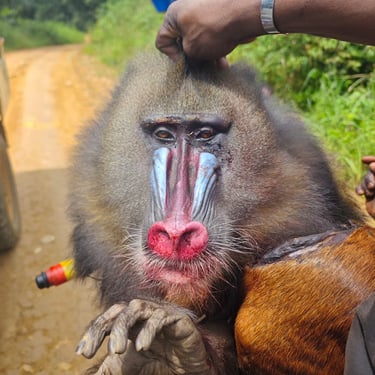
An adult male mandrill encountered along a forest road in the RoC.
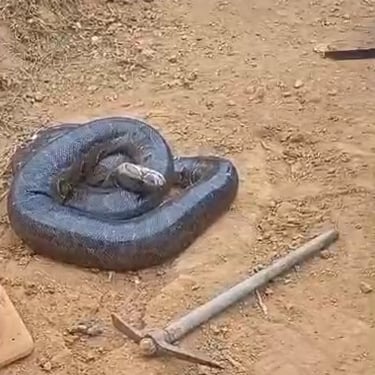
Python sebae
A large python, most likely an African rock python.
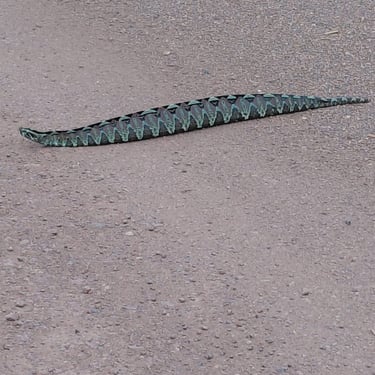
Bitis nasicornis
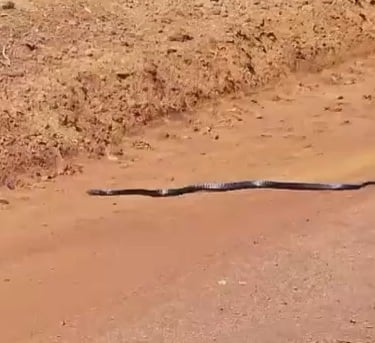
Jameson’s Mamba
A rhinoceros viper, known for its striking geometric patterns and highly effective camouflage.
These are just some of the remarkable animals we encountered during our time in and around the forests of Mayoko. The region’s rich wildlife also includes leopards, crocodiles, and many other species.